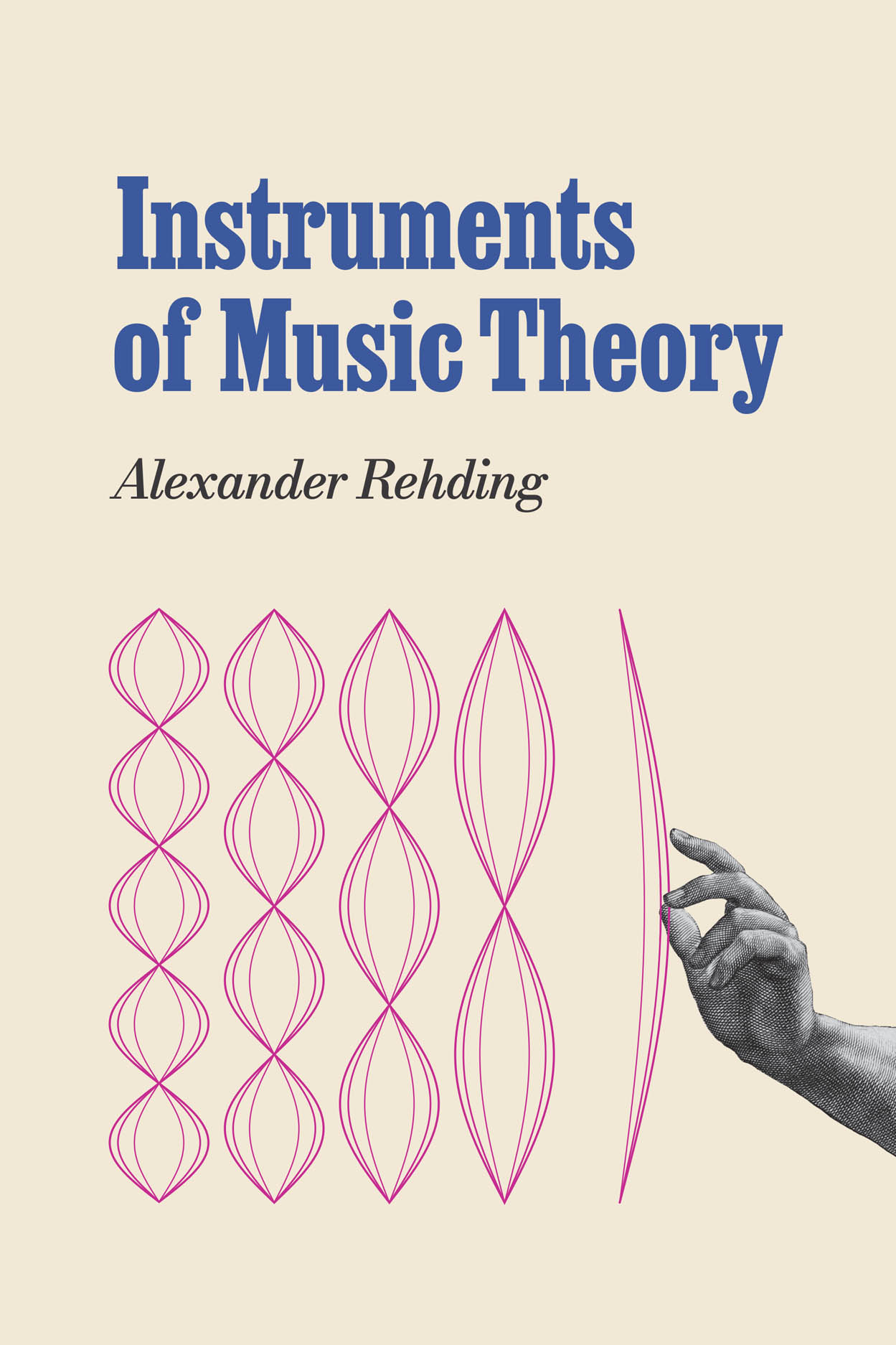
Instruments of Music Theory
Instruments of Music Theory
Shows how musical instruments and the sounds they produce are not incidental, but an integral part of music theory.
Many musicians dread music theory: Its rules and diagrams can feel stern and lifeless, far removed from the sounds that make music so thrilling. In this book, Alexander Rehding looks at music theory from a different angle. He argues that the sounds of the instruments on which music theory is demonstrated—starting with the piano in the music classroom—play a much more active role than we usually notice. They are “instruments” in a double sense: musical noisemakers, but also tools in a kind of scientific experiment. Rehding strips these devices down to their sound-generating mechanisms to show us how to read musical instruments for their theoretical content.
Instruments of Music Theory turns our attention to instruments such as multiphonic sirens, tuning forks, Chladni plates, Aeolian harps, and Wheatstone concertinas—these devices generate sounds that call for new ways of listening, measuring, and thinking about music. Bringing together music theory, critical organology, and media theory, this book can be read as a user’s manual for how to put sound back into music theory. Rehding shows us how instruments do not only produce sound—they produce knowledge about music. Through the lens of these new instruments, Instruments of Music Theory recasts fundamental musical ideas such as pitch, harmony, form, and scale from the ground up to give new meaning to the stuff we call music.
256 pages | 48 halftones, 7 tables | 6 x 9 | © 2027
New Material Histories of Music
Music: General Music
Reviews

Table of Contents
List of Figures and Tables
Preface: Monochords, Pitch Pipes, Sirens
Part I: Fundamentals
Chapter 1: Music Theory Lessons
Part II: Sound Knowledge ca. 1800
Chapter 2: Chladni’s Order
Chapter 3: Cagniard’s Crisis
Part III: Creatures of the Siren
Chapter 4: The Time of Opelt
Chapter 5: Kastner’s Musical Chemistry
Chapter 6: Ellis’s Scales
Part IV: Futures and Pasts
Chapter 7: Another Music Theory Lesson
Acknowledgments
Notes
Bibliography
Index