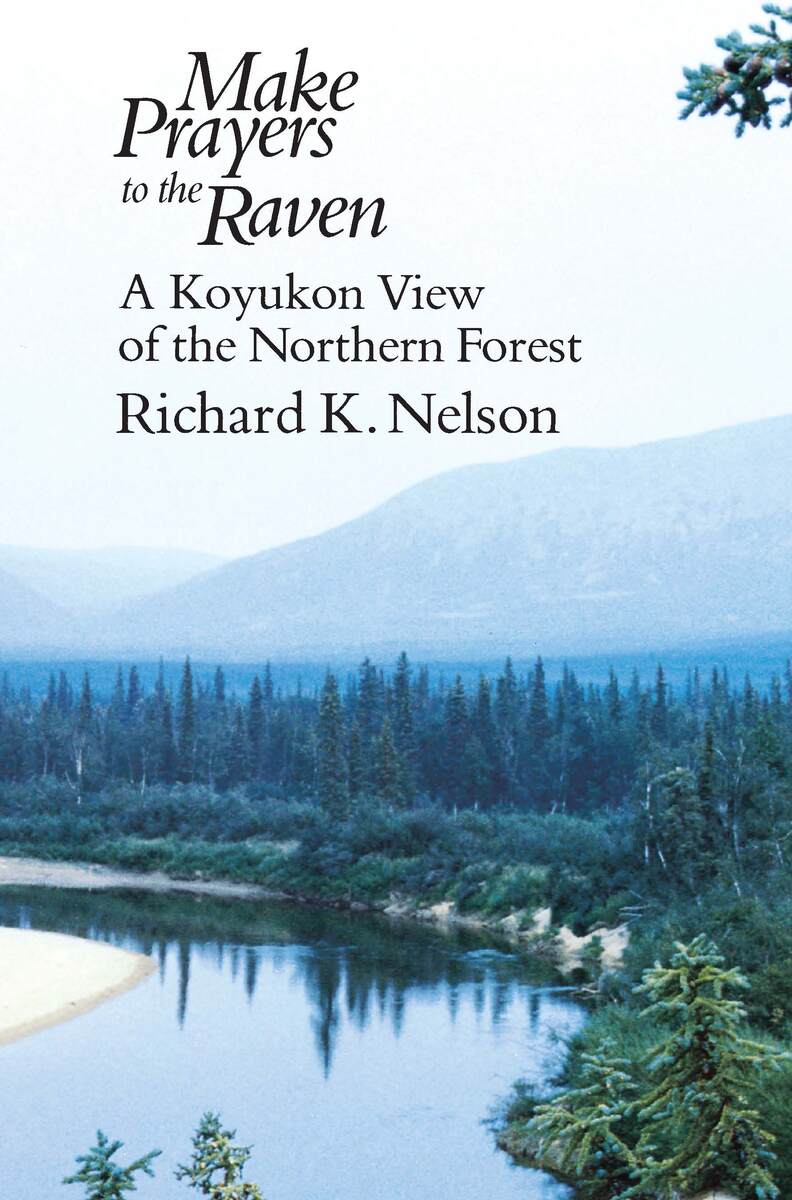
Make Prayers to the Raven
A Koyukon View of the Northern Forest
Make Prayers to the Raven
A Koyukon View of the Northern Forest
A powerful account of the deep connection between the Koyukon people of western Alaska and the natural world that sustains them
A blending of ethnography, personal reflections, and natural history, Make Prayers to the Raven is a moving account of the Koyukon people of western Alaska, who follow a traditional lifeway of hunting, trapping, and fishing in remote villages scattered across the boreal forest. Intimacy with nature is the foundation of their existence, and they have accumulated a masterly knowledge of their environment. The Koyukon hunter moves through a watchful forest, kills with humility and respect, and treats his catch as a being filled with power.
In Make Prayers to the Raven, Nelson describes, from a Koyukon point of view, , elements of the earth, sky, and atmosphere of the boreal forest, as well as the significant plants and animals. He retells their origins in the dreamlike Distant Time, their spirit powers, their behavior and personality, and the rules dictating their proper treatment by men and women. Make Prayers to the Raven leads the reader to an appreciation of the power and substantiality of Koyukon beliefs, and it serves the Koyukon people themselves by educating others about their way of life and by providing the Koyukon with a means of passing on traditional knowledge to their children.
308 pages | 22 halftones, 1 map | 6 x 9 | © 1986
Anthropology: Cultural and Social Anthropology
Biological Sciences: Ecology
Reviews

Table of Contents
Orthography
Introduction
1. The People
2. The Watchful World
3. Earth, Air, and Sky
4. The Plants
5. Earth Animals
6. The Fishes
7. The Birds
8. The Small Mammals
9. The Predatory Mammals
10. The Large Mammals
11. Ecological Patterns and Conservation Practices
12. Principles of Koyukon World View
13. Nature and the Koyukon Tradition
Epilogue
Appendixes
1. The Study
2. The Boreal Environment
3. Koyukon Terms for Natural Entities
4. Uses for Selected Major Species
Bibliography
Index
Excerpt
I was traveling alone with my dog team one bitter cold morning, on the trail that Crossed Moosehorn Lake and led toward a distant bend of the Koyukuk River. An hour earlier, I had set out from the village of Huslia, where I was living with the Koyukon people, studying their ways of understanding and interacting with the natural world. Halfway down the narrow lake, the perfect stillness was broken by a rush of wings overhead. Looking up, I saw a raven flap heavily to the top of a nearby spruce. It scrutinized me as I drew near, then flew on and landed in a tall tree farther along the trail. . . . I glanced back along the trail and saw only a dense cloud of vapor from the dog’s breath, hanging there in the stillness. Having confirmed what I already knew—that I was entirely alone—I looked intently at the raven above me. After a long, self-conscious hesitation, I shouted "Ts eek’ aal {Old Grandfather J, bring me luck!" Then I looked behind me again, as my words echoed into the surrounding forest.