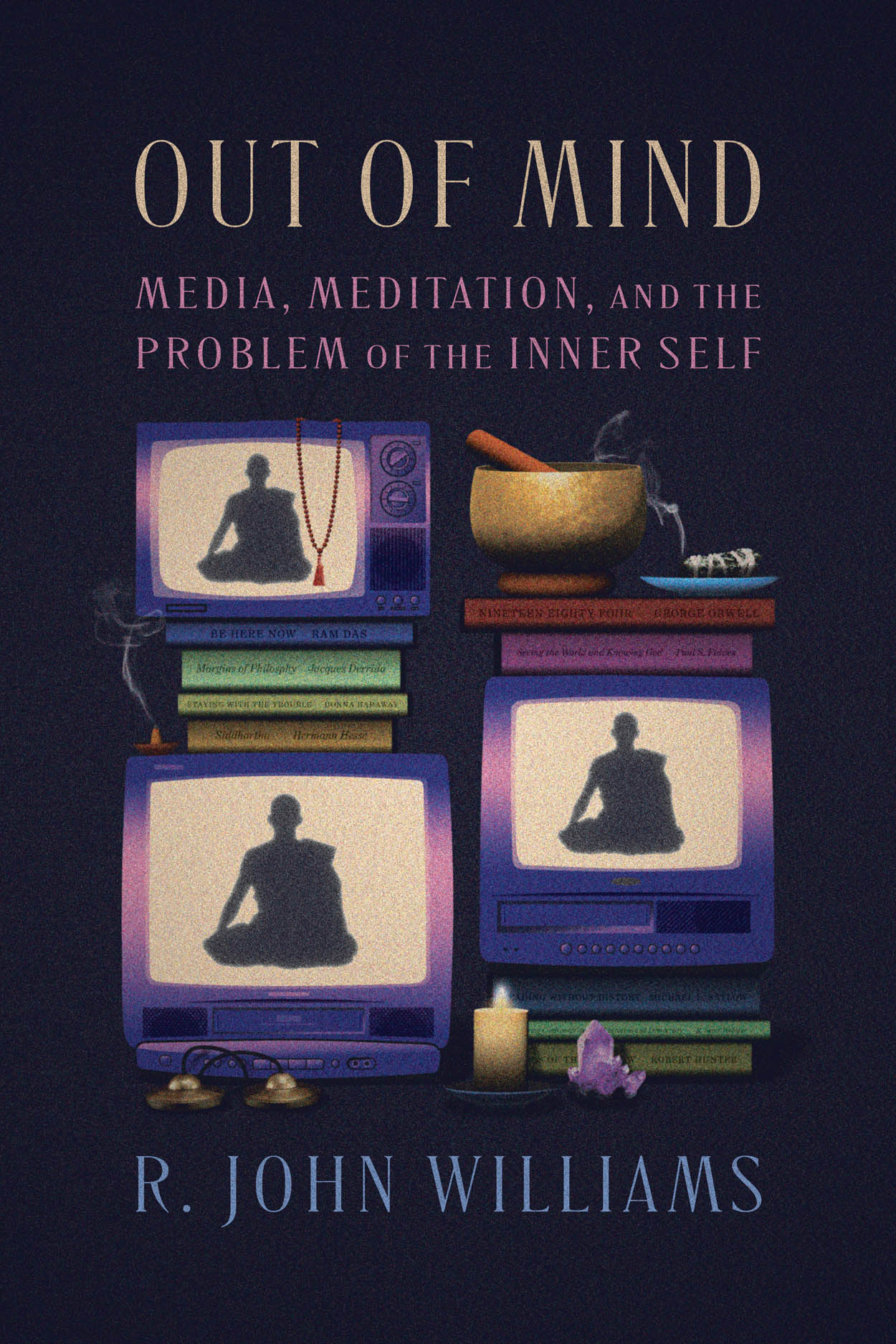
Out of Mind
Media, Meditation, and the Problem of the Inner Self
Out of Mind
Media, Meditation, and the Problem of the Inner Self
A history of modern mindfulness meditation and a critique of it as a practice that deeply misunderstands human consciousness.
Mindfulness meditation is often presented as a simple practice of turning inward and quieting the world to discover an authentic “inner voice,” but the very idea that consciousness contains such a voice depends on a slew of contradictory beliefs about Buddhism, neuroscience, and more. In Out of Mind, R. John Williams challenges the core (and misguided) assumptions about human nature that shaped the development of modern meditation, revealing how they were informed by nineteenth-century theosophy, German idealism, Buddhist modernism, Heideggerian mindfulness, Cold War brainwashing, and even phenomena like sensory deprivation tanks. Against the notion that truth lies hidden in our brains, Williams argues that we are never sealed off from the world. Our consciousness extends beyond our own minds—into the intricate web of language, literature, art, and other people to which we are intimately connected.
464 pages | 76 halftones | 6 x 9 | © 2026
History: History of Ideas
Philosophy: Philosophy of Mind
Religion: American Religions, Religion and Society, South and East Asian Religions
