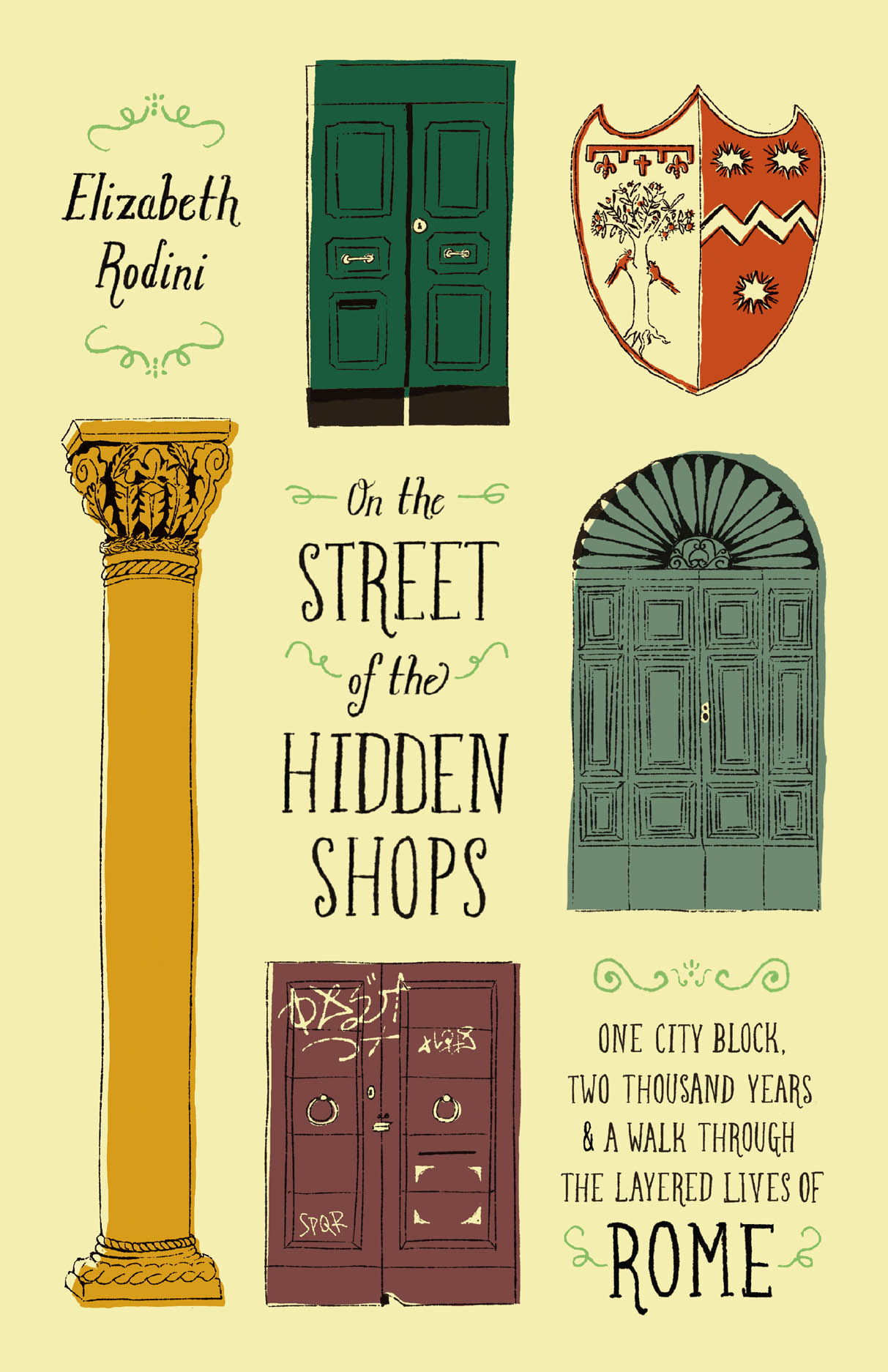
On the Street of the Hidden Shops
One City Block, Two Thousand Years, and a Walk Through the Layered Lives of Rome
On the Street of the Hidden Shops
One City Block, Two Thousand Years, and a Walk Through the Layered Lives of Rome
Delve into Rome’s lost history through the stories of a single city block.
Cutting through the heart of Rome is Via delle Botteghe Oscure, a time-worn street named for the mysterious “shops” said to run beneath it. History lies thick here, a museum atop a convent atop ancient ruins; layered in are traces of artisans and poets, pilgrims and saints, a Fascist deportation, a communist coffee bar, a political assassination, and shopkeepers, too. These stories all rest upon a single city block, the same place where, in 13 BCE, the triumphal Roman general Lucius Cornelius Balbus built a monumental theater complex in his own honor.
Elizabeth Rodini’s On the Street of the Hidden Shops digs deep into this corner of the city, uncovering a set of surprising, often poignant narratives that range across two thousand years. For as the walls of Balbus’s compound decayed and the neighborhood was rebuilt, this block would come to shelter Romans from all walks of life: the daughters of local prostitutes, an earnest young man in search of a bride, an entrepreneur determined to preserve the city’s colorful dialect, a Jewish family recently liberated from the nearby Ghetto, and a band of idealistic archaeologists unearthing a long-forgotten past, as well as a gifted baker, a medieval donkey, and a Renaissance ghost. Their stories survive in archives and artifacts but also in the enduring power of rumor and legend.
On the Street of the Hidden Shops invites us on a captivating journey to one place across many centuries. Its tight urban focus reveals a Rome most visitors miss, while uncovering some of the many Romes that have been largely lost to history.
376 pages | 13 halftones, 3 line drawings | 5 1/2 x 8 1/2
History: Ancient and Classical History, European History, Urban History
Travel and Tourism: Tourism and History
Reviews

Table of Contents
List of Illustrations
Maps
Prologue: Invisibility
Introduction: A Circus, a Theater, and the Mystery Under the Hidden Shops
Before: Bedrock
1. The Theatrical Imagination of Lucius Cornelius Balbus, 13 BCE
Smithing Corinthian Bronze
Public Facilities, Roman Style
Secret Societies and Silent Sacrifices
2. How to Cook the Most Marvelous Lime, 1380–1600
Baking Bread
Burials and Grave Goods
Pilgrims’ Passage
3. The Life and Loves of Giacinto Gigli, 1594–1671
Lady Rosa Founds a Church
Cleanliness and Godliness
A Donkey’s Life
4. The Miserable Virgins of Santa Caterina della Rosa, 1611–1640
Creative Column Reuse
Turning Hemp to Rope
Saint Ignatius Slept Here
5. Giggi Zanazzo Speaks Roman, 1860–1911
Guidetto Guidetti Was Here
Caravaggio Pays His Compliments
Ludovica Comes Home to Rest
6. The Brief Life of Ester Mieli, 1937–1943
Buckle My Shoe
Modern Wayfinding
A Different Michelangelo
7. Fighting for the Heart of Rome, 1940–1982
Madonna of the Street
Insure It!
Processing with an Icon
8. Coffee with the Communists, 1960–2007
An American Princess and Her Poets
Dining at Madonna Bona’s
Call Me Barbara
9. Aldo Moro and the Topography of Terror, 1978
The Poles Come to Stay
Painting in the Street
A Holy Mess
10. A Radical Dig with the Balbi Gang, 1981–1989
Epilogue: Impermanence
A Walking Guide for Visitors
Acknowledgments
Notes and Sources
Index