Distributed for Hong Kong University Press
American-Designed Shopping Malls in China
How shopping malls transformed China’s urban landscapes and the consumer patterns of their residents.
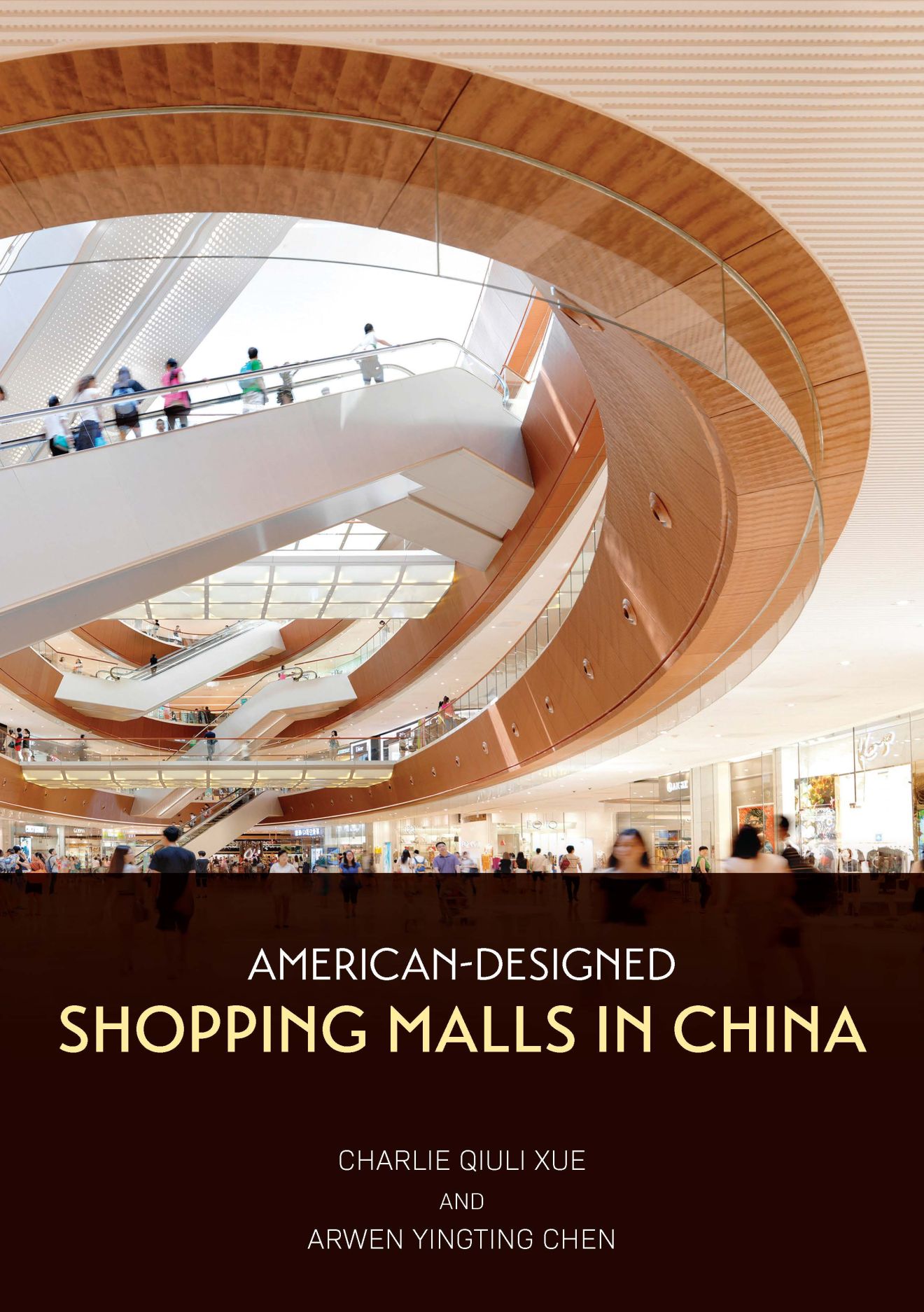
China’s remarkable journey from poverty to becoming the world’s second-largest economic power is marked by extraordinary urban growth and the booming consumption capacity of urban populations. Central to this development are multifunctional commercial complexes and shopping malls, which are now key features of modern urban districts. Shopping malls, originally introduced to China by American architects in the 1980s, have since flourished on an even larger scale than their American counterparts.
This book delves into the origins of shopping mall development in the United States after World War II, tracing how American architects exported this building type into China’s rapidly evolving urban landscapes, particularly in Beijing, Shanghai, Chengdu, Kunming, and Guangzhou. Using primary sources, statistical analyses, and illustrated case studies, American-Designed Shopping Malls in China explores the evolution of shopping malls as a consequence of China’s profound economic, social, and cultural change over the past four decades. The book also highlights the impact of American consumerism on the everyday lives of Chinese people, altering not only consumer patterns but also local architectural practices. This tale of transformation is essential reading for anyone interested in China’s rapid urban development.