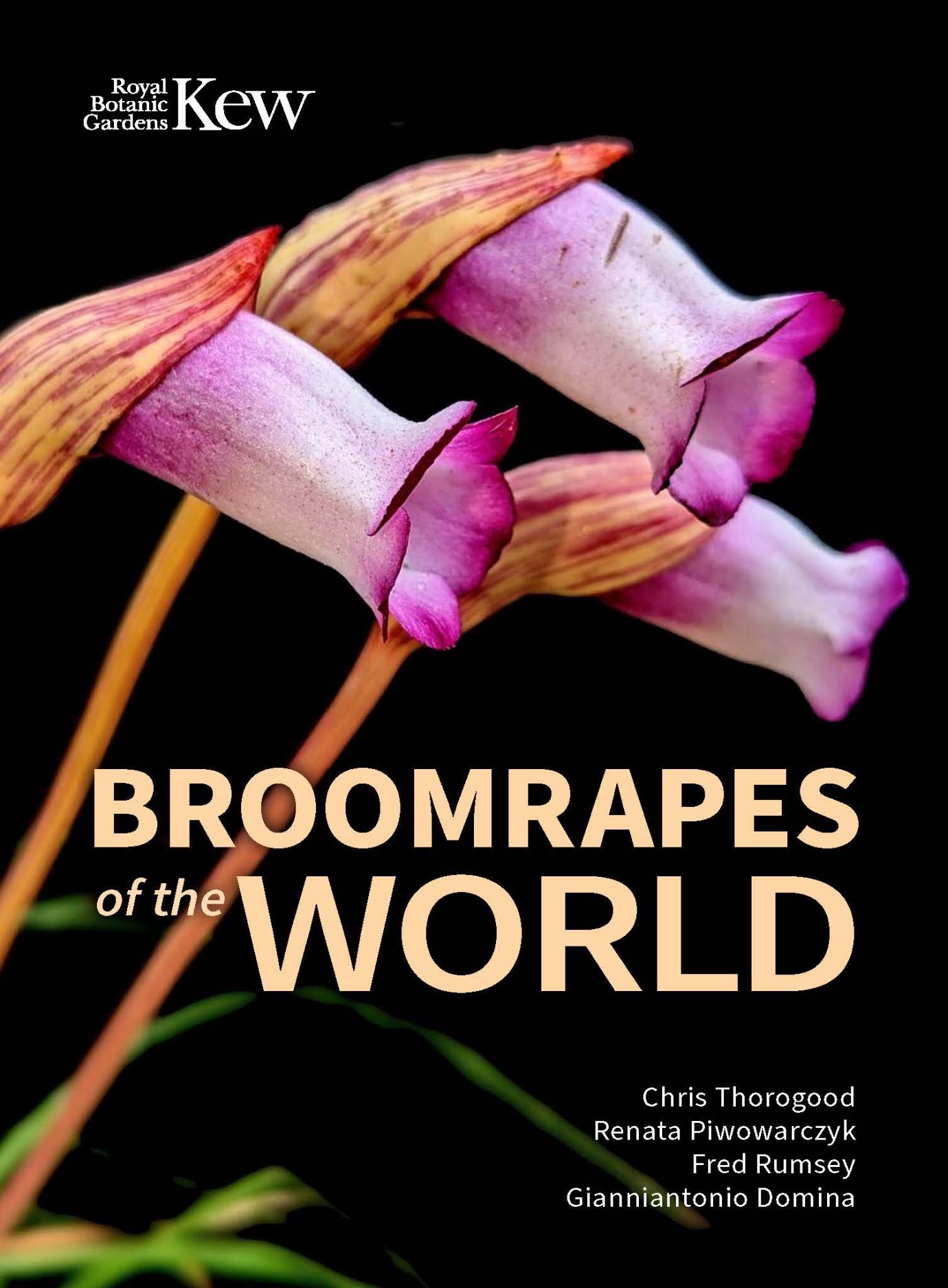
Distributed for Royal Botanic Gardens, Kew
Broomrapes of the World
A practical guide to parasitic plants.
Parasitic plants are some of the most bizarre and fascinating organisms in the plant kingdom and have attracted attention for millennia. They have been studied by the ancient Greeks and used throughout history through to the modern day as herbal medicines, ingredients in recipes, ink for writing, and dye for textiles. The Orobanchaceae family, also known as broomrapes, is comprised of small parasitic plants with many diverse species, from the woodland-dwelling toothwort to the hardy desert hyacinth. This group of striking and unusual plants can be found in every biome in the world.
This thorough guide is focused on species entirely dependent on their host for nutrients, revealing the taxonomically challenging species with clarity and precision for experts and amateurs alike. Illustrated throughout with 600 color photographs, each species profile includes habit, morphology, ecology, distribution, key diagnostics, and similar species. Introductory chapters cover the life cycle, biology, morphology, reproduction, habitats, ecology, distribution, traditional uses, and conservation of broomrapes around the world.