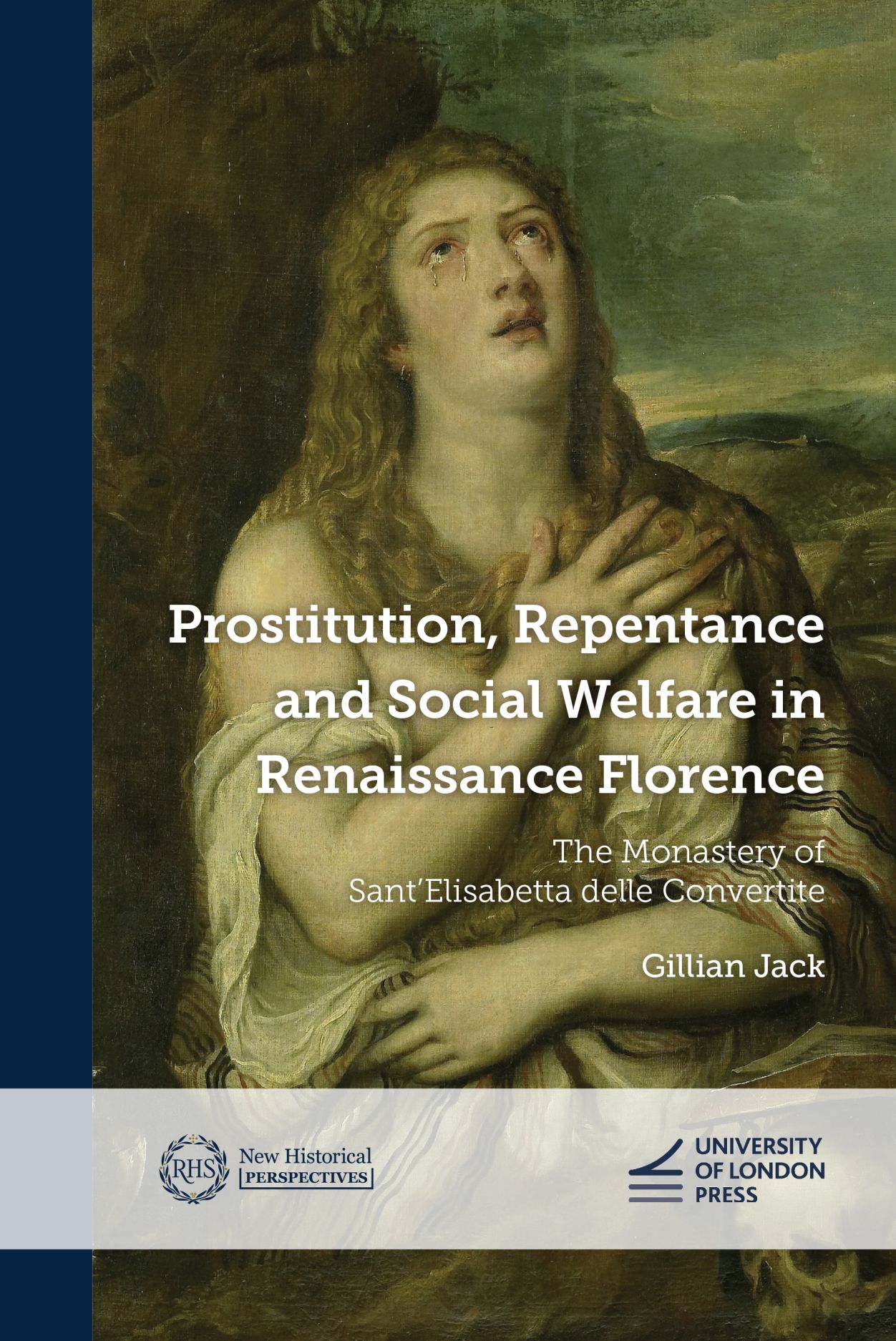
Prostitution, Repentance and Social Welfare in Renaissance Florence
Distributed for University of London Press
Prostitution, Repentance and Social Welfare in Renaissance Florence
A study of the survival of Sant’Elisabetta delle Convertite, the Florence monastery for repentant prostitutes, during the long Renaissance.
From the fourteenth century, prostitutes in Florence were encouraged to leave their profession and spend their lives in repentance at the monastery of Sant’Elisabetta delle Convertite. Many did over its five hundred years, and the monastery was soon one of the most populous in Florence. As the longest enduring monastery for repentant prostitutes, Sant’Elisabetta is an integral part of the history of nuns and of prostitution in the medieval and early modern periods, and it had an important place in municipal responses to social welfare and civic morality. It is only by uncovering successive governments’ involvement in Sant’Elisabetta that we can fully understand how the city attempted to manage both prostitution and welfare.
This is the first book-length study to put Sant’Elisabetta into its full historical context. It establishes the place of this often-overlooked nunnery in the wider world of medieval penitential piety, renaissance charity, and early modern social welfare, exploring the myriad ways in which the Florentine authorities attempted to stabilize Sant’Elisabetta’s finances and ensure its continued survival. Drawing on diverse archival sources, the book’s long chronological scope offers valuable insights into the broader histories of the relationship between the Florentine state and monastic institutions, public policy, welfare, and women in the long Renaissance.


Table of Contents
Introduction
1 Prostitution and repentance before Sant’Elisabetta
2 Sant’Elisabetta’s foundation and first 75 years (1329–1402)
3 The Onestà and the Notte: civic funding and legalised prostitution (1403–1469)
4 Sant’Elisabetta and civic authorities at the end of the republic (1470–1512)
5 Sant’Elisabetta and the ducal state (1513–1568)
6 Sant’Elisabetta in Grand Ducal Florence (1569–1619)
7 A new era? (1619—1650)
Conclusion
Appendices