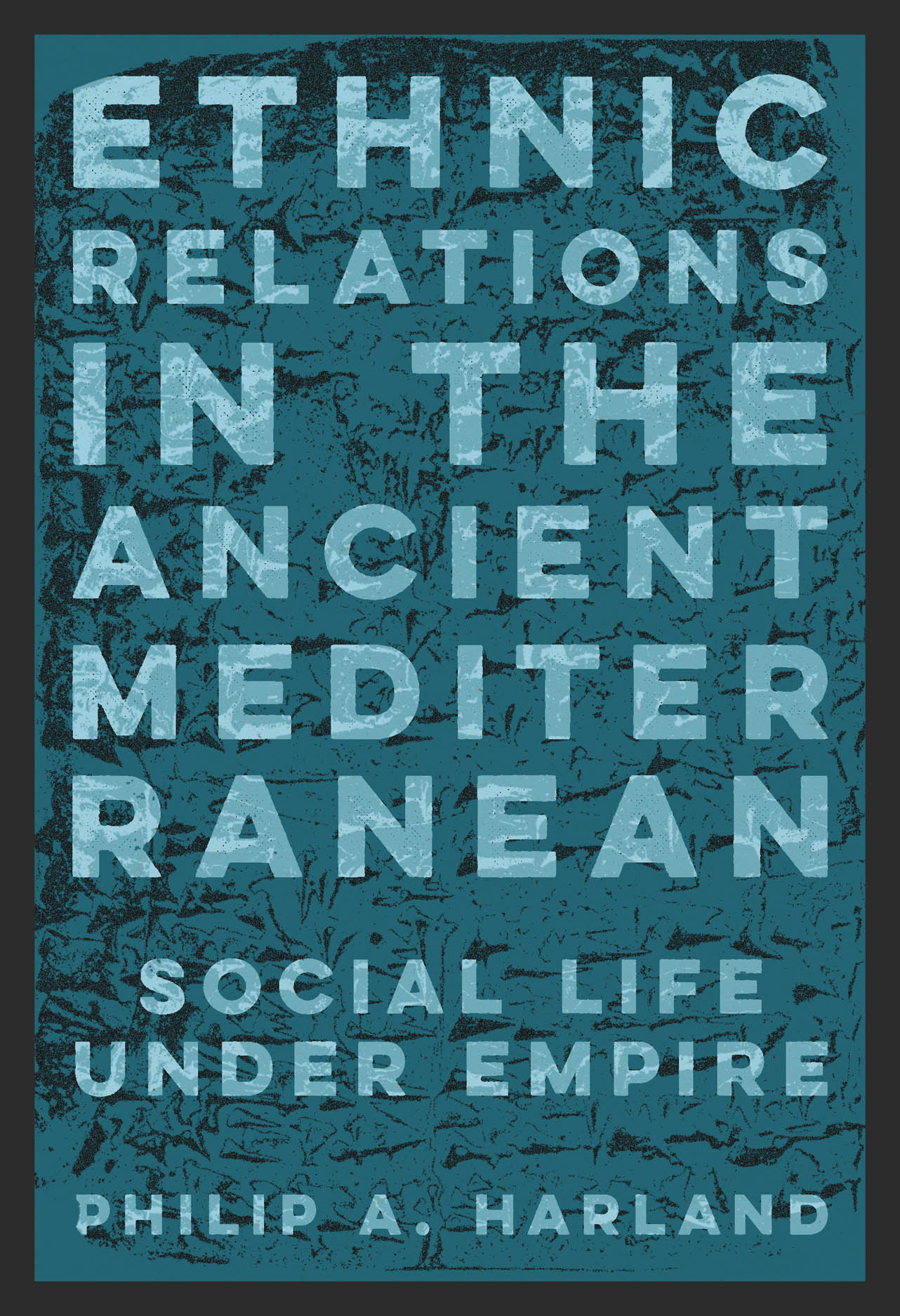
Ethnic Relations in the Ancient Mediterranean
Social Life Under Empire
9780226848617
9780226848594
9780226848600
Ethnic Relations in the Ancient Mediterranean
Social Life Under Empire
A fresh perspective revealing how ethnographic thinking shaped the sociocultural landscape of the ancient Mediterranean.
With this book, Philip A. Harland presents a large-scale rereading of social and cultural life in the eastern part of the ancient Mediterranean in particular, examining social interactions among peoples, from culturally dominant groups to minority populations. Harland assesses literary and archaeological evidence to yield fresh insights into the dynamics of ethnic relations in the region and to explore how the population navigated questions of identification, differentiation, categorization, stratification, criminalization, and population production.
Harland considers encounters between peoples as well as their representations of one another, reframing the social landscape of the ancient world by focusing on the influence and ubiquity of the ethnographic imagination between the fifth century BCE and the third century CE. Drawing insights from anthropology, sociology, and postcolonial studies, Harland offers close readings of papyri, inscriptions, monuments, sculptures, and other materials that reflect interactions between different populations at all levels of society. He gives careful attention to the perspectives of enslaved, immigrant, and subject peoples, including Egyptians, Babylonians, Syrians, and Judeans under Persian, Hellenistic, or Roman rule.
Offering an innovative reading of social and cultural life from the ground up, this book reveals the extent to which ethnographic thinking structured the sociocultural landscape of the ancient world.
With this book, Philip A. Harland presents a large-scale rereading of social and cultural life in the eastern part of the ancient Mediterranean in particular, examining social interactions among peoples, from culturally dominant groups to minority populations. Harland assesses literary and archaeological evidence to yield fresh insights into the dynamics of ethnic relations in the region and to explore how the population navigated questions of identification, differentiation, categorization, stratification, criminalization, and population production.
Harland considers encounters between peoples as well as their representations of one another, reframing the social landscape of the ancient world by focusing on the influence and ubiquity of the ethnographic imagination between the fifth century BCE and the third century CE. Drawing insights from anthropology, sociology, and postcolonial studies, Harland offers close readings of papyri, inscriptions, monuments, sculptures, and other materials that reflect interactions between different populations at all levels of society. He gives careful attention to the perspectives of enslaved, immigrant, and subject peoples, including Egyptians, Babylonians, Syrians, and Judeans under Persian, Hellenistic, or Roman rule.
Offering an innovative reading of social and cultural life from the ground up, this book reveals the extent to which ethnographic thinking structured the sociocultural landscape of the ancient world.
360 pages | 19 halftones | 6 x 9 | © 2026
History: Ancient and Classical History
Literature and Literary Criticism: Classical Languages
Reviews

Table of Contents
List of Illustrations
Introduction
1. Imagining Ethnic Hierarchies
2. Revisiting Wise “Barbarians” and Noble “Primitives”
3. Asserting Civilizational Priority
4. Navigating Diversity at the Village Level
5. Contesting Hierarchies
6. Visualizing Invading and Conquered Peoples
7. Criminalizing Frontier and Liminal Populations
8. Countering and Redirecting Criminalization
Conclusion
Acknowledgments
Abbreviations
Notes
Bibliography
Index
Introduction
1. Imagining Ethnic Hierarchies
2. Revisiting Wise “Barbarians” and Noble “Primitives”
3. Asserting Civilizational Priority
4. Navigating Diversity at the Village Level
5. Contesting Hierarchies
6. Visualizing Invading and Conquered Peoples
7. Criminalizing Frontier and Liminal Populations
8. Countering and Redirecting Criminalization
Conclusion
Acknowledgments
Abbreviations
Notes
Bibliography
Index