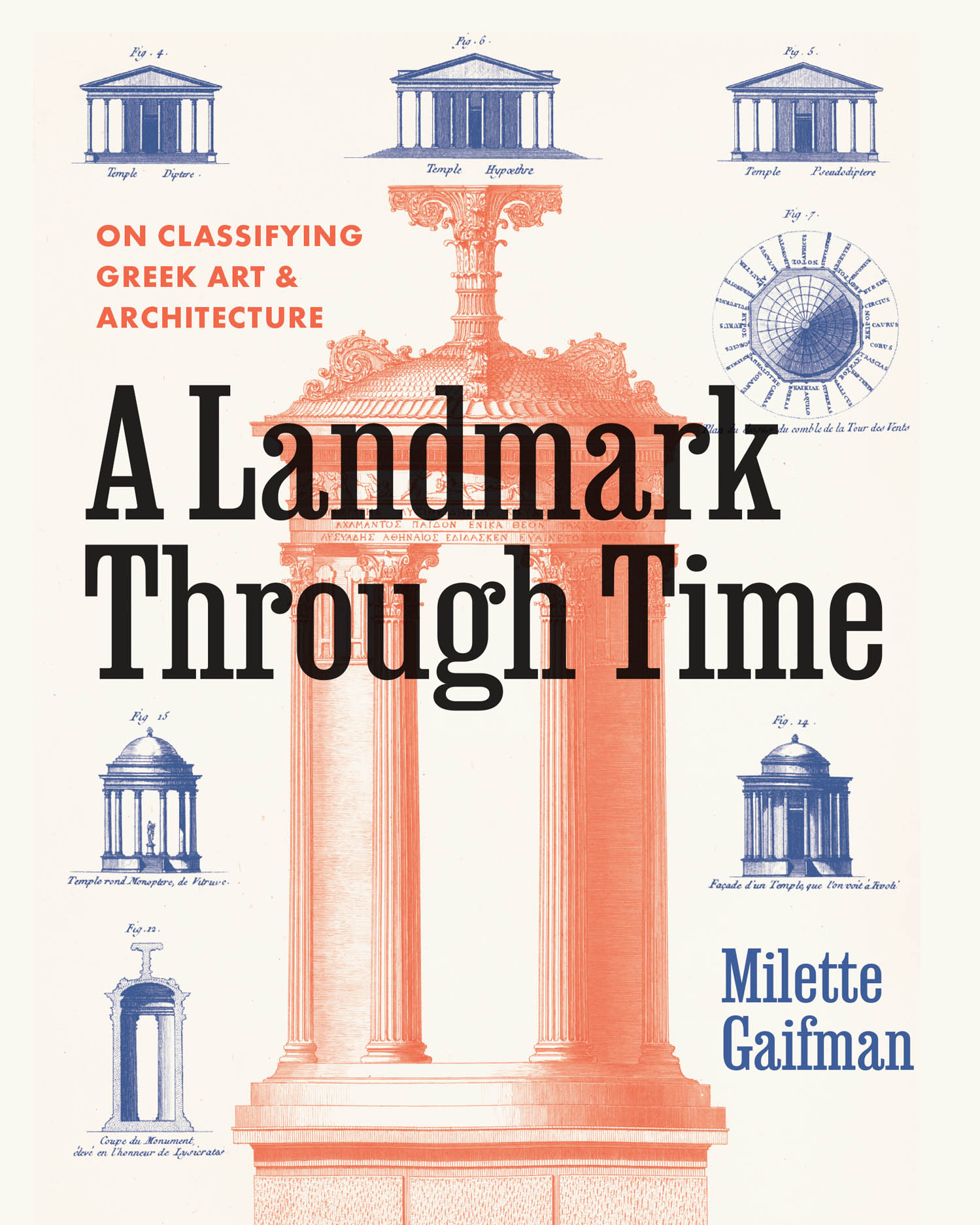
A Landmark Through Time
On Classifying Greek Art and Architecture
A Landmark Through Time
On Classifying Greek Art and Architecture
What representations of a monument across centuries can tell us about how we engage with, study, and understand the past.
In a square in the heart of Athens, a cylindrical structure rests on a platform made up of large stone blocks. Semi-columns encircle it, and a slanted roof sits on top, with a plantlike feature at its highest point. Focusing on this well-documented remnant of classical Greece, the so-called Choregic Monument of Lysikrates, Milette Gaifman considers the history of engagement with this ancient landmark, looking at how names, scholarly classifications, and illustrations have shaped our understanding of it from the fourth century BCE to the modern era.
Studying the landmark’s representation through centuries of scholarship and illustrations, she examines how modes of engagement with the past often impose their own baggage, interpretive forces, and inaccuracies. By being aware of their histories, advantages, and limitations, Gaifman argues that we should treat them as helpful tools and flexible guidelines rather than as strict or unmoving criteria. A Landmark Through Time reveals how adapting and expanding traditional frameworks of classification and technologies can open fresh vantage points for appreciating the complexity and ingenuity of ancient Greek art and architecture.
224 pages | 94 color plates, 16 halftones | 8 x 10
Louise Smith Bross Lecture Series
Architecture: History of Architecture
