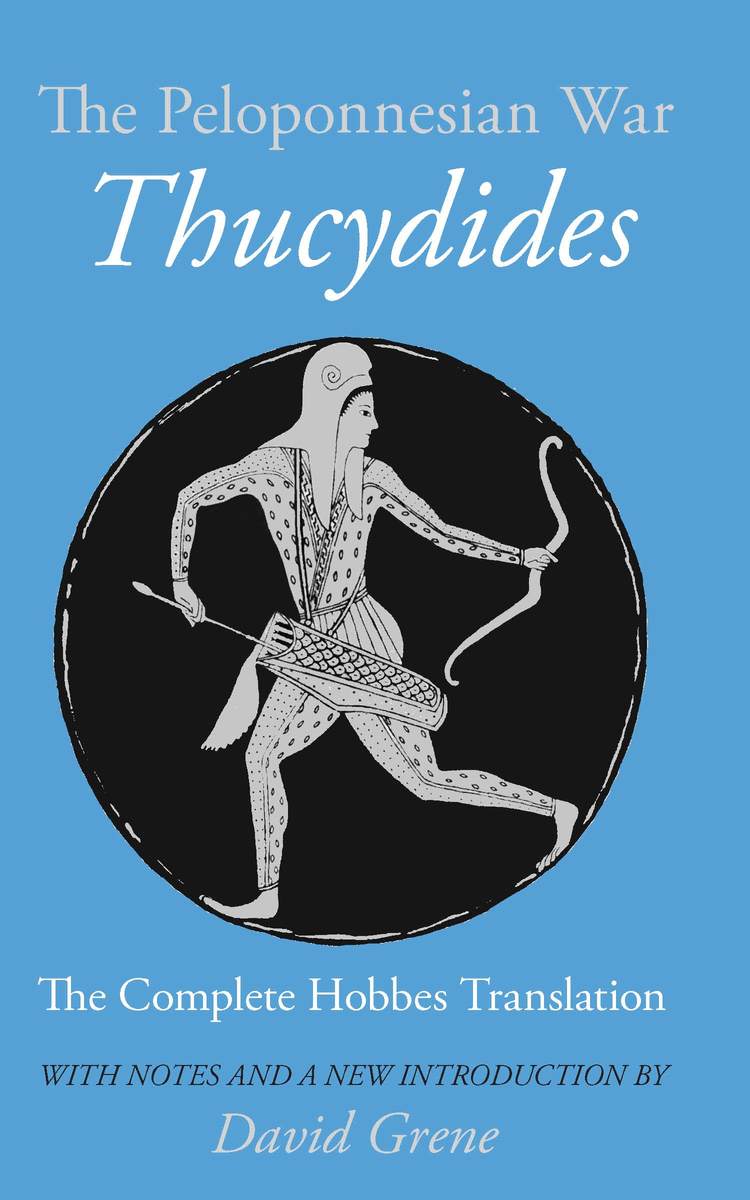
The Peloponnesian War
The Peloponnesian War
The classic account of the struggle between Athens and Sparta that has fascinated readers of history for centuries
Thucydides’s account of the war between Athens and Sparta, begun in 431 BCE when the war commenced, is considered by many to be the first work of serious history. Applying then-new standards of evidence, impartiality, and cause and effect—and, crucially, banishing the gods from his tale—Thucydides created a gripping, detailed narrative of the civilization-shaking clash of two imperial powers that brings to life the ancient world and its conflict.
This powerful translation by Thomas Hobbes has long been considered the truest to the original Greek. Hobbes’s eloquent and lucid style captures Thucydides’s use of language in recreating the conflict, as well as Thucydides’s special ability to portray and enliven that led to his revealing accounts of the people and events in that long war: Pericles’s funeral oration, the plague, the civil war in Corcyra, the debate between Cleon and Diodotus over the fate of Mitylene, the Melian Dialogue, and above all the ruin of the Sicilian expedition. Hobbes’s rendering of The Peloponnesian War is one of those rare translations that are works of art in their own right.
David Grene’s notes clarify the few mistranslations of which Hobbes is guilty, the occasional difficulties of Hobbes’s seventeenth-century English, and passages involving facts and circumstances not familiar to those who cannot read Greek. This edition also includes Hobbes’s essay “On the Life and History of Thucydides,” his address to his general readers and dedicatory epistle, and a new Introduction by Grene. Written before Hobbes’s works on political philosophy, this translation sheds light on his later Leviathan and other works and, above all, displays the intensity of the relation between the Greek historian and the seventeenth-century philosopher.
668 pages | 2 maps | 5.20 x 7.90 | © 1989
History: Ancient and Classical History
Political Science: Classic Political Thought
