Distributed for Bard Graduate Center
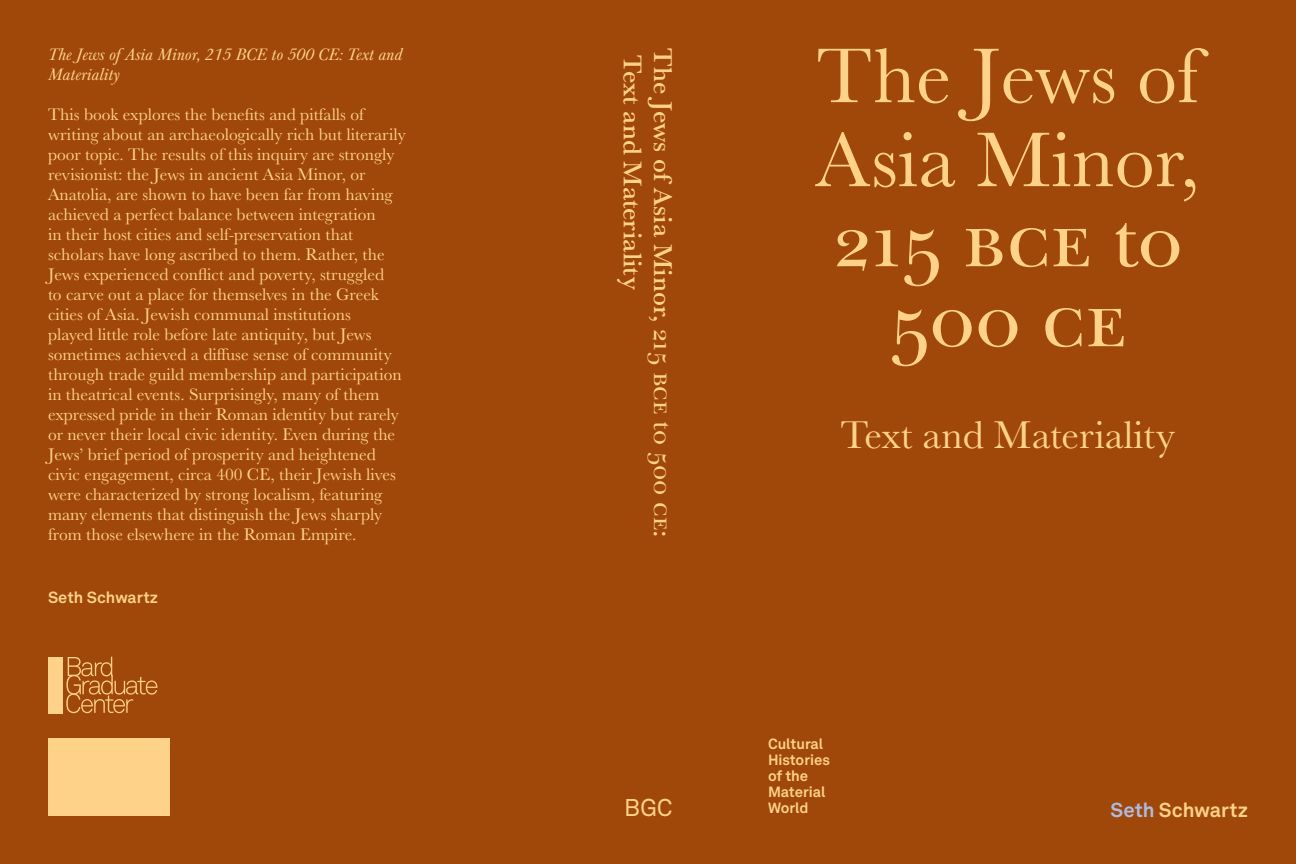
The Jews of Asia Minor, 215 BCE to 500 CE:
Text and Materiality
This exploration of Jewish identity in Ancient Asia Minor sheds light on a unique community and offers a valuable contribution to the canon of Jewish studies.
This book explores the benefits and pitfalls of writing about an archaeologically rich but literarily poor topic. The results of this inquiry are strongly revisionist: the Jews in ancient Asia Minor, or Anatolia, are shown to have been far from the perfect balance of integration in their host cities and self-preservation that scholars have long ascribed to them. Rather, the Jews experienced conflict and poverty, struggling to carve out a place for themselves in the Greek cities of Asia. Jewish communal institutions played little role before late antiquity, but Jews sometimes achieved a diffuse sense of community through trade guild membership and participation in theatrical events. Surprisingly, many of them actually expressed pride in their Roman identities, but rarely––or never––their local civic identities. Even during the Jews’ brief period of prosperity and heightened civic engagement, circa 400 CE, their lives were characterized by strong localism, featuring many elements that distinguish them sharply from Jews elsewhere in the Roman Empire.
Tackling a history shrouded in myth and fiction, The Jews of Asia Minor reconciles literary and archaeological evidence to create a detailed analysis of the evolving history of Jews in Asia Minor under Roman law.
350 pages | 9 maps, 2 diagrams | 6.25 x 9.25 | © 2026
Bard Graduate Center - Cultural Histories of the Material World
History: Ancient and Classical History
Religion: Judaism


Table of Contents
Series Preface
Introduction
Part I Beginnings
Chapter 1 Asian Jews before the Romans
Chapter 2 Jewish Privileges in Asia and Their Implications
Chapter 3 The First Century: Communities and their Peripheries? Acts, Josephus, and the
“Synagogue of Severa”
Chapter 4 Breakdown
Chapter 5 The Second Century
Part II The Imperial State and the Jews, 212–400
Chapter 6 The Two Late Antiquities of the Jews of Asia Minor
Chapter 7 Asian Jews in the Third Century
Chapter 8 The Third Century Continued: Other Cities of Western Asia
Chapter 9 The Year 400: Sardis and Aphrodisias
Chapter 10 The End of Late Antiquity
Conclusion Diasporic Material Culture Revisited
Abbreviations
Bibliography
Index
Introduction
Part I Beginnings
Chapter 1 Asian Jews before the Romans
Chapter 2 Jewish Privileges in Asia and Their Implications
Chapter 3 The First Century: Communities and their Peripheries? Acts, Josephus, and the
“Synagogue of Severa”
Chapter 4 Breakdown
Chapter 5 The Second Century
Part II The Imperial State and the Jews, 212–400
Chapter 6 The Two Late Antiquities of the Jews of Asia Minor
Chapter 7 Asian Jews in the Third Century
Chapter 8 The Third Century Continued: Other Cities of Western Asia
Chapter 9 The Year 400: Sardis and Aphrodisias
Chapter 10 The End of Late Antiquity
Conclusion Diasporic Material Culture Revisited
Abbreviations
Bibliography
Index