Distributed for University of Wales Press
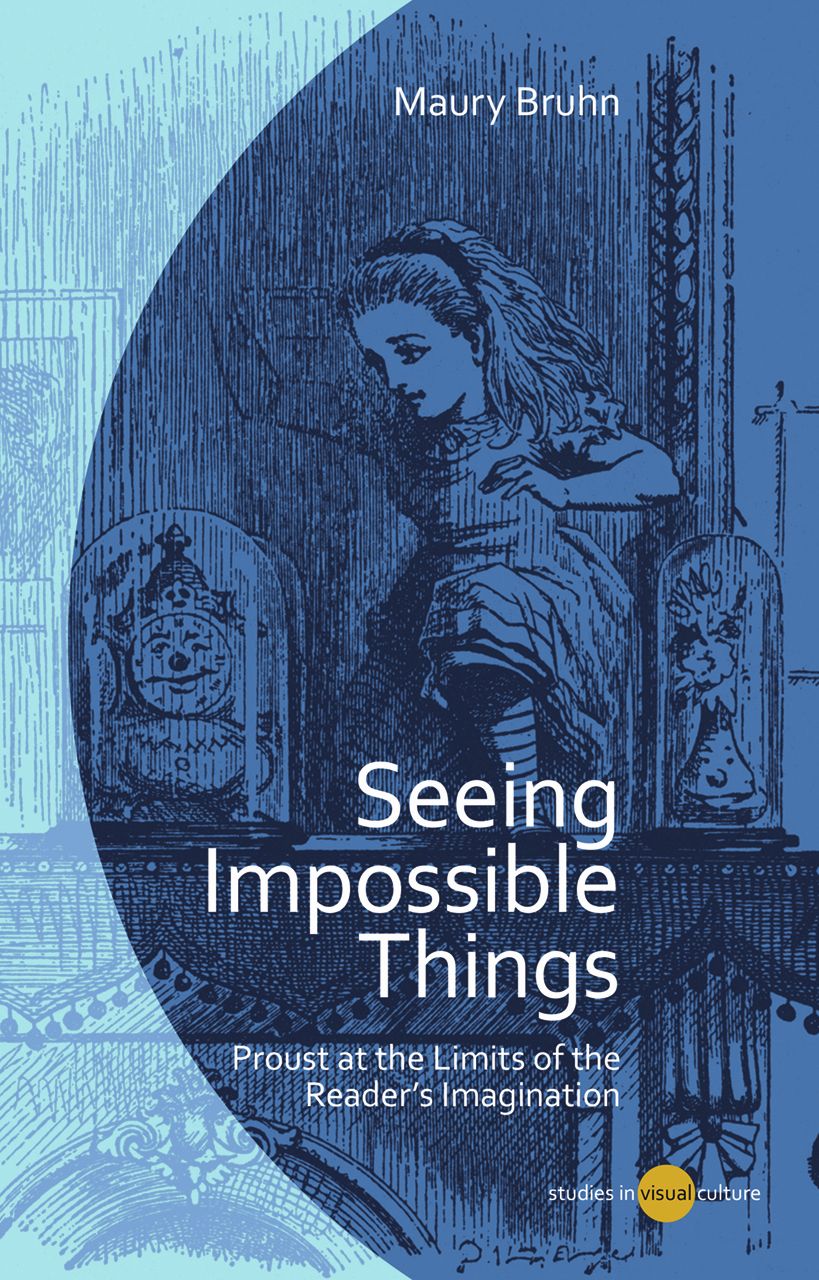
Seeing Impossible Things
Proust at the Limits of the Reader’s Imagination
A comprehensive introduction on how to conceptualize Proust’s Recherche.
What do we see in our mind’s eye when we read Marcel Proust’s À la recherche du temps perdu? The Recherche is full of objects behaving strangely, visual perspectives shifting unexpectedly, new dimensions opening within the familiar, and the lines between imagination, memory, and perception blurring and collapsing. Seeing Impossible Things argues that to see Proust’s universe, the reader must work to visualize the hitherto impossible, testing their cognitive prowess against dense descriptive challenges. Its chapters analyze how Proust’s descriptions of material, space, energy, and time guide reader’s visualization, demonstrating how clusters of these descriptions have the aggregate effect of expanding the reader’s imagination beyond its habitual conceptual constraints. Seeing Impossible Things ultimately proposes that the unity of the Recherche lies not in an accumulation of meaning in the form of an overarching theory of aesthetics but in an accumulation of imaginative practice culminating in the novel’s final image.
216 pages | 5.43 x 8.5 | © 2026
University of Wales Press - Studies in Visual Culture
Art: Art--General Studies
Literature and Literary Criticism: General Criticism and Critical Theory


Table of Contents
List of Abbreviations
Introduction: Seeing Impossible Things
Chapter One: Material
I. Proust’s Chardin
II. The Material of Memory
Chapter Two: Space
I. Viewing Balbec
II. Textual Landscapes Beyond Ekphrasis
Chapter Three: Energy
I. Saint-Loup’s Simultaneous Multiplicity
II. Proust’s Planes at the Limit of Representation
Chapter Four: Time
I. Path One: The Church as Artistic Instruction
II. Path Two: The Combray Church, Experience and Memory
Conclusion
Notes
Bibliography
Index