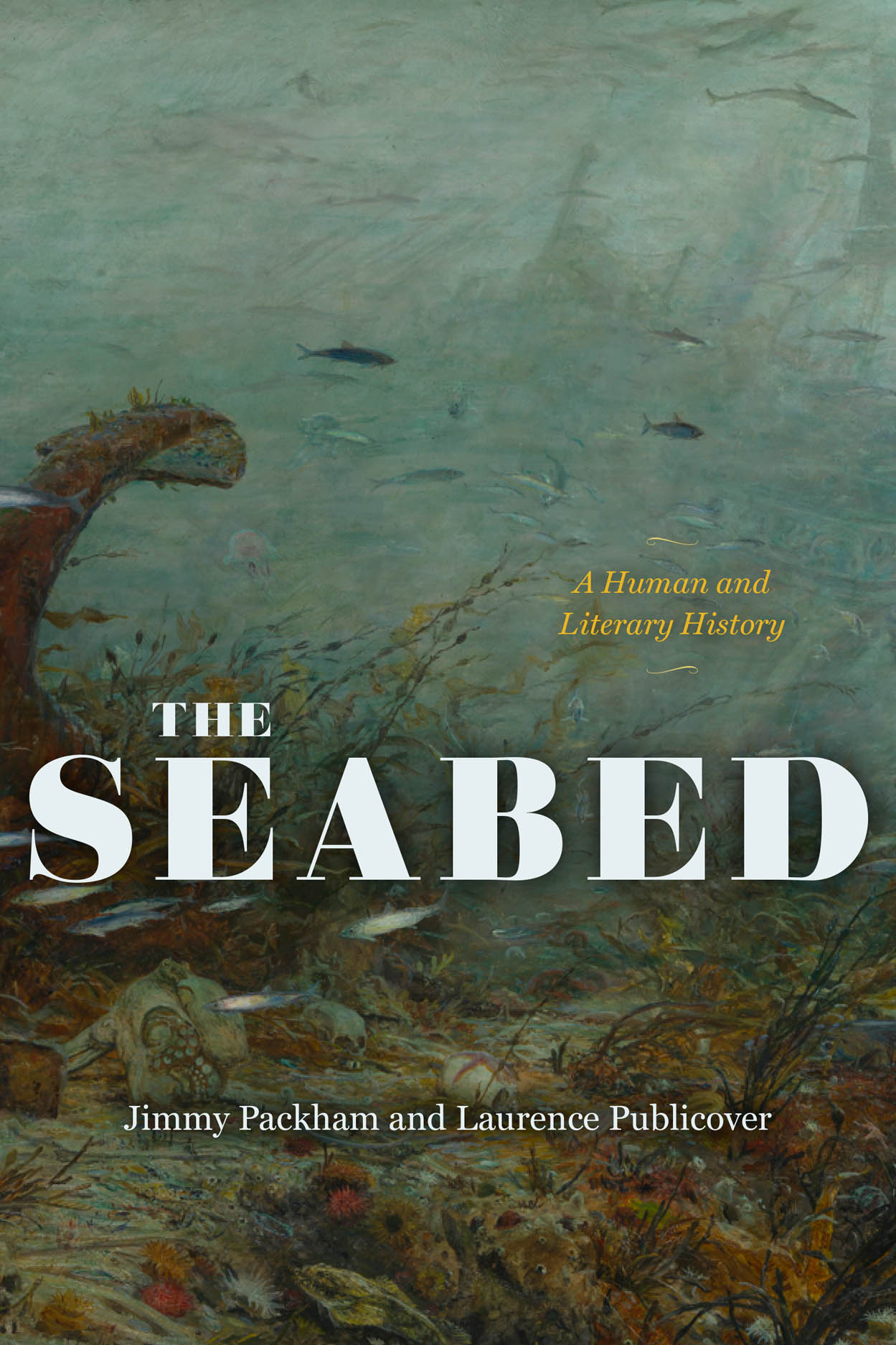
The Seabed
A Human and Literary History
The Seabed
A Human and Literary History
Uncovers human histories, cultures, and politics on the ocean floor.
While often characterized as an alien realm, the seabed has long been fundamental to human life. As new technologies offer ever greater access to this environment, the bottom of the ocean is key to debates about our future—and yet we are poorly equipped to understand our relation to it.
The Seabed plumbs the ocean’s depths to reveal a rich and complex history of human activity at the seafloor, a history that extends from the classical world to the present. Jimmy Packham and Laurence Publicover highlight the literary significance of the seabed, examining works by writers including Aphra Behn, Anton Chekhov, Euripides, Herman Melville, M. NourbeSe Philip, William Shakespeare, Derek Walcott, and H. G. Wells, as well as lesser-known authors who have imagined this dark and mysterious realm. Putting these in dialogue with the science writing of Rachel Carson, Sylvia Earle, and others, and with visual art, politics, and historical case studies, they show how imaginative speculations concerning the ocean floor have influenced, and continue to inform, human activity on the seabed itself. Through chapters that explore sea burial and seafloor memorials, scientific exploration, deep-sea infrastructure, salvage from the seabed, and deep-sea extraction, the book reveals that the ocean floor’s cultural visibility has fluctuated over time. But longstanding visions of the seabed continue to shape our relationship with this place, a site for undersea cables and—in the near future—deep-sea mining.
The bottom of the ocean is closer than we think. Understanding our history there is crucial to assessing the present and imagining our future.
280 pages | 13 halftones | 6 x 9 | © 2026
Geography: Environmental Geography
History: Environmental History
Literature and Literary Criticism: General Criticism and Critical Theory
Reviews

Table of Contents
List of Figures
Foreword: Oceans in Depth
Introduction: Led Down into the Sea-Ground
1. Burial: Unearthly Interment
2. Messengers: Thought-Divers
3. Webs: Words That Flicker, Flutter, and Beat
4. Salvage: Unlikely Returns
5. Extraction: Utopian Prospects
Epilogue: Submergence
Acknowledgments
Notes
Select Bibliography
Index